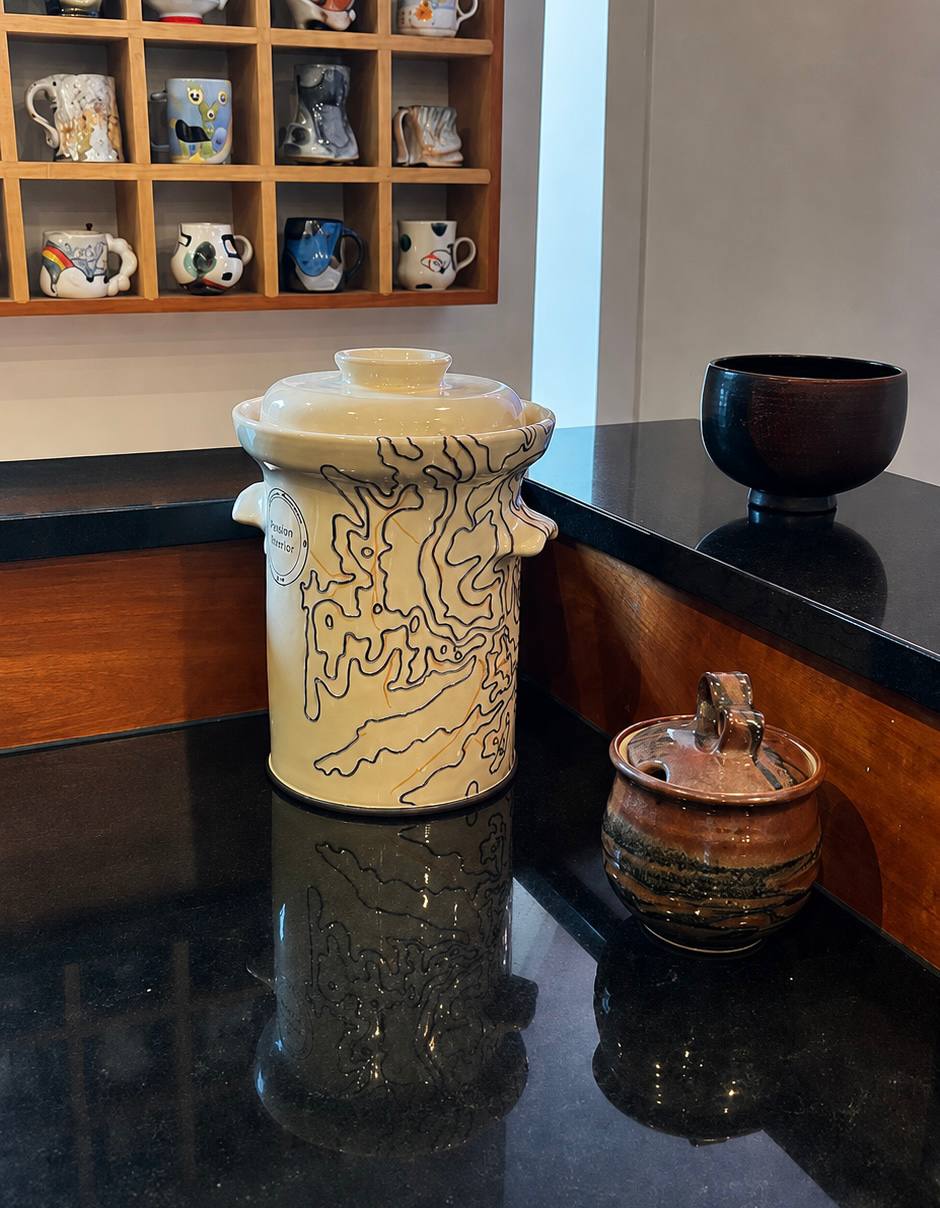
How to Start Collecting Contemporary Ceramics
A practical way to begin: look slowly, buy thoughtfully, and let your taste develop through use, attention, and time.
Starting a ceramics collection can feel intimidating at first. The field is wide, the price range is broad, and the language around craft can sometimes sound more exclusive than welcoming. But collecting contemporary ceramics does not have to begin with expertise, a large budget, or a perfect plan. It begins with attention.
The best collections usually grow from a genuine response to objects: the shape of a cup, the weight of a bowl in the hand, the way a glaze softens light, or the quiet authority of a vessel on a shelf. If you begin there, with what truly holds your attention, you are already on solid ground.
Start with use, not status
For many people, the most natural way into collecting is through functional work. A mug, a teabowl, a serving dish, or a small vase allows you to live with ceramics every day rather than admire them only from a distance. That daily contact teaches you quickly. You notice comfort, proportion, balance, surface, and durability. You learn what kinds of forms feel essential to you and what kinds feel merely decorative.
Beginning with use also removes some of the pressure. You do not need to ask whether a piece is “important enough” to own. You only need to ask whether it is well made, visually compelling, and something you want to return to again and again.
Learn your eye by looking closely
Before buying broadly, spend time looking. Visit galleries, artist websites, exhibitions, and pottery sales. Compare forms. Notice what draws you in repeatedly. Are you pulled toward quiet, restrained surfaces or more expressive marks? Do you prefer crisp silhouettes or softer, fuller forms? Are you most interested in functional objects, sculptural work, or the space between the two?
A collection becomes stronger when it reflects a point of view, even if that point of view is still emerging. Looking closely helps you discover the through-lines in your taste. Over time, you may realize that you care most about tactility, asymmetry, architectural structure, warmth, or restraint. That recognition is one of the real pleasures of collecting.
Buy fewer, better pieces
One of the easiest mistakes at the beginning is buying too much too quickly. It is usually better to buy fewer pieces and choose them with care. A small collection of works you genuinely love will teach you more than a large group of objects acquired impulsively.
When considering a purchase, ask a few simple questions. Does the piece feel resolved? Is the proportion convincing? Does the surface feel intentional rather than generic? Can you imagine living with it for years? Would you still want it if no one else saw it? Those questions can be more useful than trying to guess market value or trend.
Pay attention to makers
Collecting becomes richer when you follow makers, not just objects. Learn who made the work, how they think, what materials they use, and what concerns shape their practice. Some collectors are drawn to a wide variety of voices; others prefer to go deeper with a smaller number of artists over time. Both approaches are valid.
Knowing the maker adds context, but it also sharpens your eye. You begin to see what is distinct in one artist’s approach to line, foot, lip, handle, volume, or glaze chemistry. You start to recognize consistency, risk, and growth. That awareness makes collecting feel less like shopping and more like participation in an ongoing conversation.
Let the collection live in your home
Contemporary ceramics often reveal themselves slowly. A vessel that seemed modest at first can become indispensable once it finds the right place in a room. A bowl can change the feeling of a table. A cup can become part of a morning ritual so fully that it alters your sense of pace and attention.
This is why placement matters. Give the work space to breathe. Let sculptural pieces sit where light can move across them. Let functional work be used often enough to earn familiarity. The goal is not to make your home feel like a showroom. It is to allow the objects to become part of the atmosphere of daily life.
Trust taste, then refine it
You do not need perfect confidence at the beginning. In fact, part of the pleasure is that your taste will refine itself as you go. Early purchases may not look exactly like later ones, and that is fine. A collection should show development. It should record curiosity, attention, and a deepening sense of what matters to you.
Trust your first responses, but keep testing them. Read, look, ask questions, and return to work more than once before buying. The more time you spend with ceramics, the less you will worry about whether your choices are “right” and the more you will care about whether they feel necessary.
Collect with patience
The strongest collections are rarely built in a rush. They grow piece by piece, through repetition, surprise, and careful decisions. Patience allows room for discernment. It gives you time to notice what still matters after the first burst of attraction fades.
If you begin with attention, choose with care, and stay open to learning, you do not need to force the process. A meaningful ceramics collection will take shape on its own — gradually, distinctly, and in a way that reflects how you actually want to live.